High-Density Strand Woven Bamboo Decking: The Future of Exterior Flooring
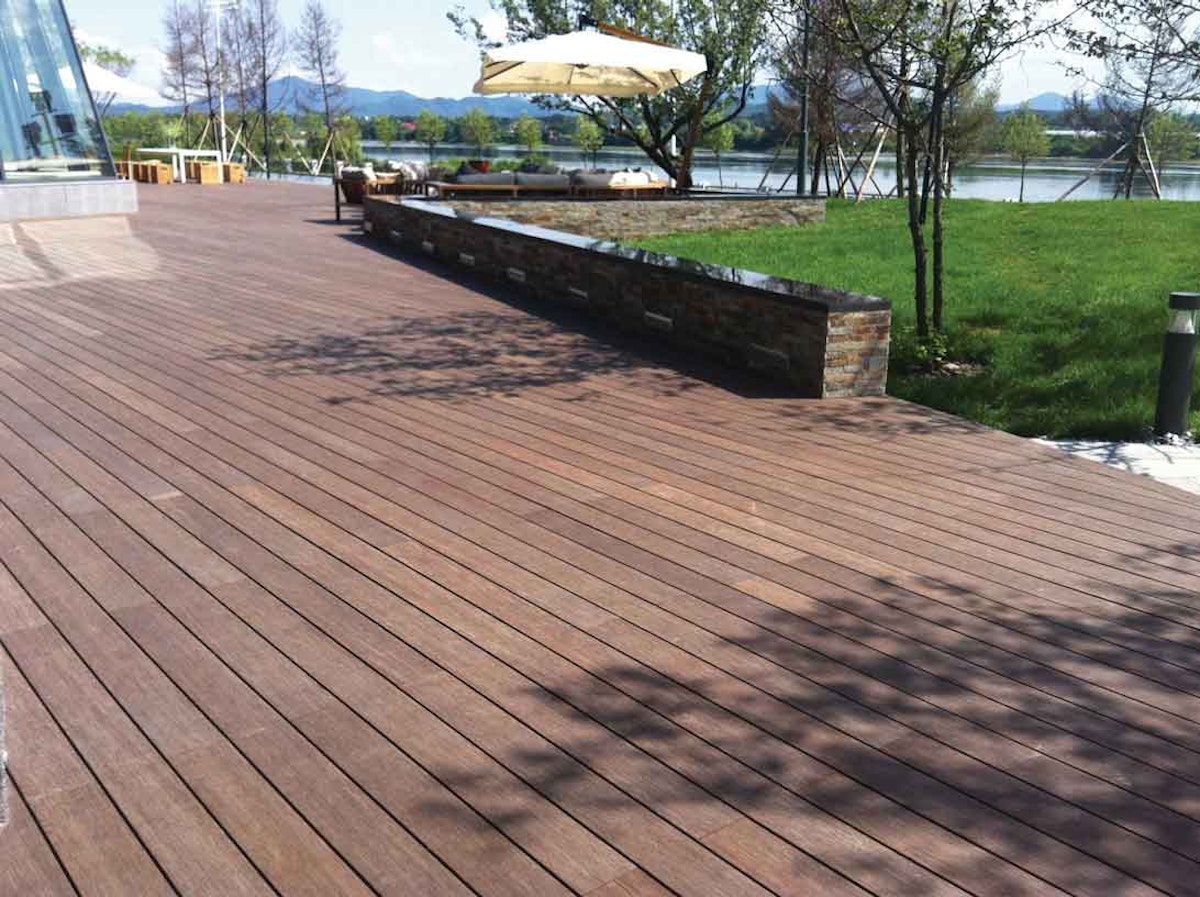
The landscape of modern outdoor architecture is undergoing a fundamental shift as builders, designers, and property owners seek materials that balance long-term durability with ecological responsibility. For decades, constructing an outdoor patio, boardwalk, or terrace meant choosing between traditional tropical hardwoods and synthetic composite plastics. Tropical woods like Ipe, Cumaru, and Teak offer rich natural warmth and structural strength, but their specification comes at a heavy environmental price, including severe deforestation concerns, long supply chains, and rising costs due to global harvest restrictions. On the other hand, early generations of plastic and wood-plastic composites avoided raw timber harvesting but introduced their own challenges, such as noticeable thermal expansion, unnatural aesthetics, structural sagging in high heat, and a heavy reliance on petroleum-based polymers.
Recent advances in material science have introduced a third path that eliminates these compromises. High-density strand woven exterior material represents an innovative evolution in architectural surfaces. By combining rapid-growth natural plant fibers with high-temperature pyrolytic processing and extreme hydraulic compaction, manufacturers have created an exterior grade plank that matches or exceeds the physical performance of the toughest tropical hardwoods. This advanced material is fast becoming the preferred choice for commercial plazas, residential decks, and public walkways around the globe.
The Material Science: From Hollow Stalks to Solid Density
Understanding why strand woven exterior planks perform so exceptionally well in harsh environments requires examining the underlying engineering process. In its raw botanical form, bamboo is a giant grass characterized by hollow stalks, thin walls, and an abundance of natural sugars and starches. Left untreated in an outdoor setting, raw stalks rapidly absorb moisture, attract wood-boring insects, and succumb to fungal rot within a short period. Transforming this raw plant into a structural powerhouse requires a multi-stage thermal and mechanical processing sequence.
The manufacturing process relies on mature Moso stalks, typically harvested between five and seven years of growth. At this stage, the plant fibers have reached their maximum tensile strength and cell wall thickness. The hollow culms are split lengthwise into long, narrow strips, and the outer waxy green bark along with the soft inner pulp are mechanically stripped away. What remains are the long, tough vascular bundles that give the plant its remarkable flexibility and vertical strength.
The critical step that distinguishes exterior grade material from standard interior products is thermal modification, also known as carbonization or pyrolytic treatment. The raw fiber strands are placed inside specialized sealed kilns and heated to temperatures exceeding two hundred degrees Celsius in a controlled, low-oxygen atmosphere. This intense heat permanently alters the chemical composition of the plant cells. The natural starches and sugars that insect pests and decay fungi feed on are completely caramelized and neutralized. Simultaneously, the hydroxyl groups within the cell walls, which are naturally inclined to bind with water, are broken down. This chemical reaction renders the fibers hydrophobic, meaning they no longer readily absorb atmospheric moisture or rainwater.
Following thermal modification, the dried strands are thoroughly coated with high-performance, marine-grade phenolic resins. The coated strands are then packed into massive steel molds and placed under giant hydraulic presses capable of exerting thousands of tons of downward force. Under this extreme pressure and high heat, the loose fibers collapse and fuse together into a solid, high-density block. The resulting material has a uniform internal structure free of natural knots, grain defects, or internal air pockets. These heavy blocks are subsequently cured and precision-milled into deck planks featuring tongue-and-groove end profiles, grooved sides for hidden fasteners, and smooth or reeded surface textures.
Unmatched Durability and Hardness for Heavy Foot Traffic
One of the primary reasons architects specify strand woven planks for demanding commercial projects is their extraordinary surface hardness and mechanical strength. The density of standard structural softwoods like pine or cedar typically ranges between four hundred and five hundred kilograms per cubic meter. Dense tropical hardwoods like Ipe reach around one thousand kilograms per cubic meter. Strand woven exterior material routinely reaches a density exceeding twelve hundred kilograms per cubic meter.
This immense physical mass translates directly into exceptional surface resilience. On the standard Janka hardness scale, which measures a material's resistance to denting and wear, strand woven planks achieve ratings well over three thousand pounds of force. This makes the surface twice as hard as domestic white oak and significantly tougher than most synthetic composites. Heavy patio furniture legs, high-heeled shoes, sharp pet nails, and rolling equipment leave no impression on the surface. For public boardwalks, resort walkways, and bustling restaurant patios that endure continuous heavy foot traffic, this high level of impact resistance ensures the deck maintains its smooth, pristine appearance for decades without developing deep gouges or structural wear patterns.
Dimensional Stability Across Extreme Climates
Outdoor surfaces face continuous exposure to severe weather elements, including intense ultraviolet sun rays, freezing winter temperatures, torrential rain, and dramatic shifts in relative humidity. Traditional timber decks expand across their grain when wet and shrink when dry, leading to common structural defects such as cupping, crowning, twisting, and seam splitting. Synthetic composite boards suffer less from moisture absorption but experience significant thermal expansion, expanding lengthwise in hot sunlight and contracting in cold weather, which puts immense stress on fasteners and framing members.
Strand woven exterior boards resolve both issues simultaneously. Because the thermal treatment neutralizes the moisture-binding sites within the plant fibers, the material exhibits a microscopic water absorption rate. Rainwater sitting on the surface cannot penetrate deep into the dense core. Furthermore, because the fibers are crushed, intertwined, and bound together in a multi-directional matrix during hydraulic pressing, the planks lose the directional grain orientation that causes raw wood to warp. Whether installed in humid tropical coastal zones, arid desert environments, or freezing northern climates, the boards display remarkable dimensional stability. The joints remain tight, the gaps stay uniform, and the overall deck plane remains flat and true season after season.
Class A Fire Resistance and Safety Performance
Building codes in many regions, particularly those prone to wildfires or high-density urban commercial zones, enforce strict flame-spread regulations for exterior construction materials. Achieving high fire safety ratings with natural wood often requires secondary chemical dip treatments that can wash out over time when exposed to rain.
High-density strand woven planks achieve superior fire resistance inherently through their physical density and thermal manufacturing process. With virtually no air pockets inside the compressed fiber block and a high concentration of flame-retardant phenolic resin, the material is extremely difficult to ignite. In standard flame-spread and smoke-density laboratory testing, exterior strand woven boards consistently earn a Class A fire rating. This allows architects to safely specify natural fiber decking for high-rise roof terraces, commercial plazas, and residential developments in strict fire-regulated zones without requiring additional topical chemical applications.
Aesthetics and Natural Aging Characteristics
While mechanical performance is crucial, visual appeal remains a primary factor in architectural surface selection. High-density strand woven planks offer a rich, dark brown aesthetic that immediately invokes the warmth and sophistication of premium tropical mahogany or walnut. The thermal modification process caramelizes the natural plant fibers to a uniform deep tone that runs completely through the entire thickness of the board, meaning deep surface scratches will not expose a light-colored core underneath.
Like all natural materials exposed to exterior sunlight, strand woven planks undergo a natural weathering cycle. Over time, ultraviolet radiation causes the rich brown tone to gradually soften into an elegant silver-gray patina. This natural graying process does not indicate structural decay or loss of mechanical strength; it is purely a surface-level visual reaction to sun exposure. For property owners who prefer to retain the original deep brown color, maintenance is remarkably simple. Applying a penetrating, water-based exterior wood oil once a year restores the deep luster and protects the fibers from UV fading. If the floor is left to age naturally to silver, routine cleaning with a soft brush and mild soap is all that is required to keep the surface free of surface dirt and debris.
Installation Protocols and Engineering Best Practices
Unlocking the full potential of high-density exterior decking requires adhering to sound construction principles during installation. Because these boards are significantly denser and heavier than traditional lumber, the supporting sub-structure and fastening hardware must be engineered accordingly.
Proper ventilation under the deck frame is mandatory. The subterranean space beneath the planks must allow for continuous cross-ventilation to prevent stagnant moisture from building up under the structure. While the planks themselves resist water absorption, a permanently damp environment underneath a low-clearance frame can create unnecessary humidity imbalances. Elevating the framing network above the soil or concrete slab and providing open perimeter vents ensures a stable ambient environment.
Additionally, installers must use high-tensile, marine-grade stainless steel hidden fastening clips designed specifically for grooved-edge high-density boards. Standard carbon steel screws or low-grade plastic clips lack the shear strength required to secure dense, heavy planks. Hidden clip systems fit securely into the side grooves of the boards, ensuring uniform spacing between planks while hiding screw heads for a clean, barefoot-friendly surface. The clips also allow the boards to expand and contract microscopically on a smooth mechanical plane, preserving the structural integrity of the joist connections over time.
Environmental Leadership and Resource Efficiency
Beyond its impressive structural credentials, high-density exterior material excels in ecological performance. Moso bamboo is legally classified as a giant grass, holding the Guinness World Record as one of the fastest-growing plants on earth. Stalks can grow up to nearly one meter in a single twenty-four-hour period during the peak spring season. This rapid regrowth allows managed forests to be selectively harvested every five years without clear-cutting or soil degradation.
The extensive underground root system remains alive and vibrant after harvest, continuously stabilizing the soil and preventing erosion while launching new shoots the following year. This self-regenerating capacity enables a managed bamboo forest to yield significantly more usable fiber per acre than traditional hardwood forests over a fifty-year cycle. By replacing slow-growing tropical woods in major architectural applications, high-density exterior boards actively reduce global demand for endangered timber species, offering a truly renewable, carbon-sequestering alternative for forward-thinking builders.
The same advanced strand-weaving manufacturing techniques used to engineer heavy-duty exterior surfaces are also widely applied indoors to create high-performance bamboo flooring and architectural wall panels. This material continuity allows designers to create seamless transitions from indoor living spaces to outdoor patios using the same sustainable fiber foundation.
The Standard for Modern Exterior Surfaces
High-density strand woven exterior material has redefined expectations for outdoor surface engineering. By combining the natural warmth and beauty of organic fiber with the density, fire resistance, and dimensional stability of advanced materials, it delivers an ideal solution for modern outdoor spaces. It eliminates the environmental damage associated with tropical hardwood logging while avoiding the mechanical limitations and synthetic look of plastic composites. For residential homeowners and commercial project developers seeking an outdoor floor that will withstand heavy traffic, severe weather, and the test of time, strand woven exterior decking stands out as a clear path forward.
About Bothbest
Bothbest is a leading manufacturer and professional factory of bamboo flooring and bamboo decking based in China. With decades of manufacturing expertise, the company specializes in producing high-density strand-woven bamboo surfaces, panels, and outdoor decking. Bothbest combines advanced technology with sustainable raw Moso bamboo to provide exceptionally durable, eco-friendly flooring solutions for global markets.