Why Bothbest Strand Woven Defeats Scratches
Living with pets brings immense joy, but it also introduces unique challenges to home maintenance, particularly when it comes to selecting a floor. Large dogs rushing to the front door, cats practicing their high-speed turns down the hallway, and the occasional spilled water bowl can wreak havoc on traditional hardwoods. For homeowners who refuse to compromise on either the natural beauty of their interiors or the happiness of their animals, finding a durable surface is a primary goal. Traditional solid oak, pine, and even some laminates frequently fail under the pressure of sharp claws and active paws.
This is where advanced alternative materials change the equation. Among the most successful options available is premium bamboo flooring. Specifically, a specialized manufacturing method known as strand weaving has emerged as the premier choice for animal-friendly households. Bothbest, a dedicated factory of bamboo flooring in China, produces a strand-woven material engineered specifically to resist the heavy abrasion, impact, and moisture challenges that come with multi-pet residences. Understanding the physics behind how this material is constructed reveals why it consistently outperforms traditional wood options.
The Biological Reality of Claws Versus Wood
To understand why a strand-woven bamboo floor excels, it helps to first examine why standard hardwood floors fail in pet-friendly homes. Traditional lumber, whether it is harvested from domestic forests or tropical environments, consists of natural grain patterns where the fibers grow vertically in a uniform direction. This structure leaves the wood vulnerable to localized pressure. When a sixty-pound dog accelerates, its weight is concentrated onto the tiny surface areas of its claws. This concentration of force easily punctures the soft cell walls of traditional wood grains, resulting in deep, permanent indentation lines that require costly sanding and refinishing to repair.
Standard hardwoods are graded using the Janka hardness scale, which measures the force required to embed a small steel ball halfway into the wood. Traditional Red Oak chips in with a rating of around 1,290 pounds of force, while harder species like North American Hard Maple reach about 1,450 pounds. While these numbers sound impressive, they represent the threshold for clean wood, not wood that is subjected to the daily scraping action of grit-covered animal paws. Over a relatively short period, the wear layer on these floors breaks down, revealing unsightly white track marks where the finish has been separated from the wood fibers underneath.
The Engineering Behind Strand-Woven Bamboo
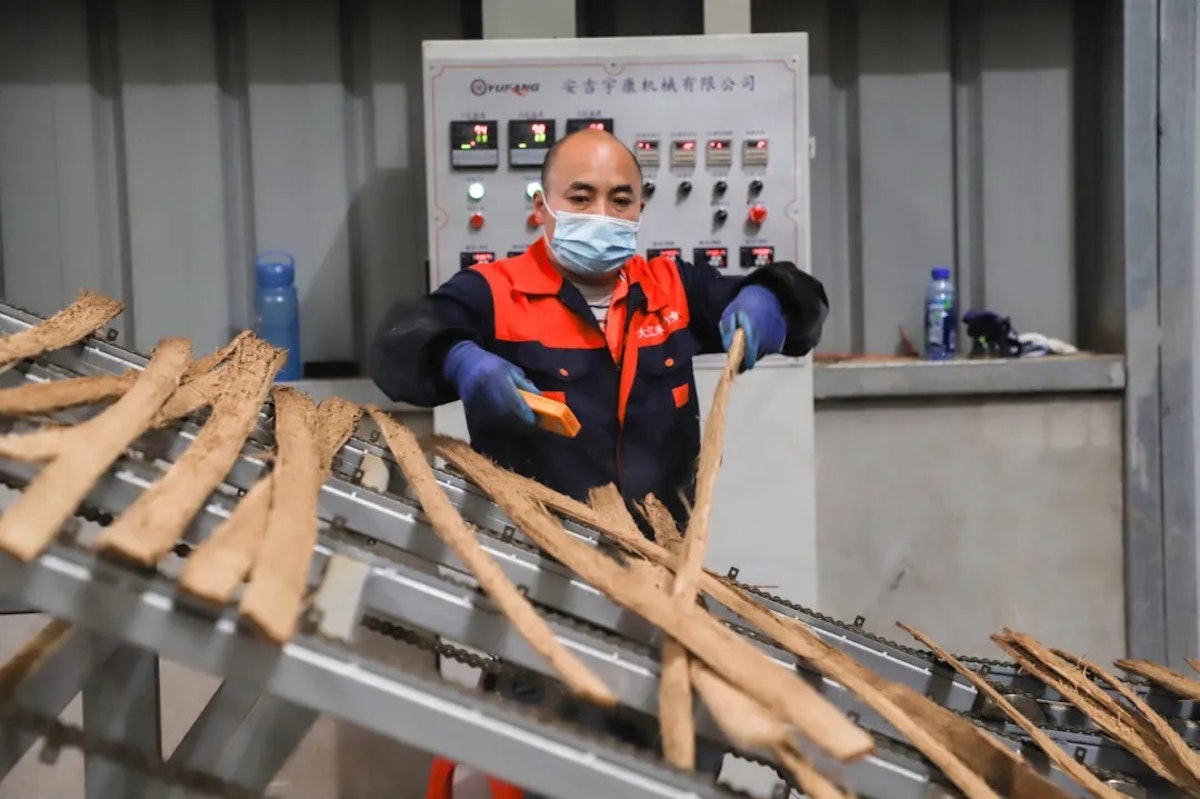
Strand-woven bamboo does not rely on the natural, unaltered grain of a plant. Instead, it is a highly engineered composite material that alters the fundamental structure of the raw fiber. The manufacturing process begins with mature Moso bamboo stalks, which are harvested at the peak of their density after five to seven years of growth. These hollow stalks are split mechanically into long, thin strips. The soft inner pulp and the waxy outer rind are completely stripped away, leaving only the ultra-dense structural strands.
These individual strands are then deeply saturated with high-performance, eco-friendly resins. Once treated, the fibers are placed into massive hydraulic presses where they are subjected to thousands of tons of pressure and extreme heat. Rather than keeping the fibers perfectly parallel, the intense compression causes the strands to intertwine, weave, and fuse into a dense, solid block.
This cross-linked internal matrix completely alters the mechanical properties of the material. The resulting density exceeds 1,100 kilograms per cubic meter, pushing its Janka hardness rating well past 3,000 pounds of force. This makes strand-woven bamboo more than twice as hard as traditional oak and significantly denser than most tropical exotic hardwoods. For a pet owner, this extreme density means that when a dog digits in its claws to run, the floor simply refuses to compress, preventing the formation of deep gouges or structural depressions.
Overcoming the Threat of Moisture and Accidents
While physical scratches are a major concern, moisture resistance is equally critical in a pet-friendly home. Muddy paws tracked in from a rainy walk, drool around the food station, and accidental house-training mishaps can spell disaster for traditional wood floors. When standard wood absorbs moisture, the fibers expand across the grain, leading to severe structural issues like cupping, crowning, and buckling at the seams. Once a wood plank cups from moisture, the edges stand proud, making them even more susceptible to getting chipped by passing claws.
Strand-woven material handles moisture completely differently. Because the bamboo fibers are compressed so tightly and completely coated in resin during the factory pressing phase, the internal porosity of the material is microscopic. There are virtually no open pathways or vascular tubes left for water to wick into the core of the plank.
This gives the material incredible dimensional stability. While no natural wood product is completely waterproof, a high-quality strand-woven bamboo floor experiences minimal expansion or contraction when exposed to temporary surface moisture. If an accident occurs while you are away at work, the liquid sits on top of the dense polyurethane finish rather than seeping down into the grain, giving you an extended window to clean the surface without fearing permanent water stains or structural warping.
The Importance of Factory-Applied Finishes
The scratch resistance of a floor is heavily dependent on its top wear layer. Even the hardest material will look worn if its clear coat scratches easily. Industrial manufacturing facilities address this by applying advanced multi-layer finishes directly on the production line, far surpassing anything that can be achieved via site-applied finishes during a home renovation.
Premium bamboo planks feature up to seven to nine layers of advanced, UV-cured acrylic polyurethane coatings. These finishes are embedded with microscopic particles of aluminum oxide or ceramic minerals. Aluminum oxide is one of the hardest raw minerals available, acting as a transparent shield that deflects the abrasive friction of claws, dirt, and sliding pet toys.
Furthermore, these factory finishes are cured instantly using high-intensity ultraviolet light lamps right on the conveyor line. This instant curing locks the molecules into a tight, cross-linked web that is incredibly tough yet retains enough microscopic elasticity to flex with the floor rather than cracking under the impact of heavy paws.
Sanding and Longevity in Active Homes
Even with the toughest finishes, decades of heavy pet ownership can eventually dull the sheen of any floor. This is where solid strand-woven bamboo provides a massive advantage over thin laminate options or cheap engineered woods. Because the dense, woven fiber runs completely through the entire thickness of a solid plank, the floor can be completely sanded down and refinished multiple times over its lifespan.
If after fifteen years of hosting multiple large dogs the surface shows signs of fine micro-scratching, a professional flooring contractor can lightly screen or sand the top layer, apply a fresh commercial-grade polyurethane finish, and return the floor to its original pristine state. This long-term refinishing capability ensures that the floor remains a permanent asset to the property, saving thousands of dollars in replacement costs down the road.
Acoustic Comfort for Quiet Homes
An often-overlooked factor in choosing a floor for pets is the acoustic environment of the home. Anyone who has lived with a dog on a clicky laminate or click-together vinyl floor knows the distinct, repetitive sound of nails tapping against a hollow surface. This constant noise can become a significant annoyance in open-concept living spaces or multi-story homes.
Due to its incredible mass and physical weight, a full glue-down strand-woven bamboo floor provides excellent sound dampening. The heavy planks absorb the impact energy of footfalls and paw clicks rather than reflecting it back into the room as a loud echo. This results in a much quieter, more serene acoustic environment, making the home feel solid, grounded, and peaceful even during high-energy play sessions.
Maintenance Routines for Pet Owners
To maximize the scratch-resistant properties of your bamboo surface, establishing an easy, consistent maintenance routine is key. The goal is to manage the fine grit and sand that pets inevitably bring indoors on their paws, as these tiny abrasive particles act exactly like sandpaper under the pressure of their feet.
High-Quality Walk-Off Mats: Place large, deep-pile mats at every exterior entrance. This catches the vast majority of dirt, moisture, and small pebbles before they ever touch the main floor.
Regular Microfiber Dust Mopping: Use a dry microfiber dust mop or a vacuum cleaner designed for hard floors (without a rotating beater bar) at least twice a week. This quickly removes loose pet hair and fine abrasive dust.
Damp Mopping with Neutral Cleaners: For deeper cleanings, use a damp microfiber mop lightly misted with a pH-neutral wood floor cleaner. Avoid steam mops, wet-mopping with heavy buckets of water, or using harsh ammonia-based cleaners, as these can eventually dull the protective aluminum oxide finish.
The Balanced Solution for Modern Households
Investing in a new floor requires a careful evaluation of durability, aesthetics, and lifestyle. For homes with pets, the stakes are elevated. Choosing a material that cannot handle the natural movements of animals leads to constant stress and premature floor failure.
By altering the natural structure of Moso fibers through high-pressure engineering, strand-woven technology creates a surface that neutralizes the threat of sharp claws, heavy impacts, and unexpected moisture. It allows pet owners to enjoy the rich, organic warmth of a premium natural floor without constantly worrying about damage. It stands as a perfect marriage of natural beauty and industrial strength, ensuring that your home remains both elegant and welcoming to every member of the family, regardless of how many legs they walk on.
About Bothbest
Bothbest is a leading manufacturer and professional factory of bamboo flooring based in China. With decades of manufacturing expertise, the company specializes in producing high-density strand-woven bamboo surfaces, panels, and outdoor decking. Bothbest combines advanced technology with sustainable raw Moso bamboo to provide exceptionally durable, eco-friendly flooring solutions for global markets.